How Much Does AI Development Cost in 2026? Real Project Ranges
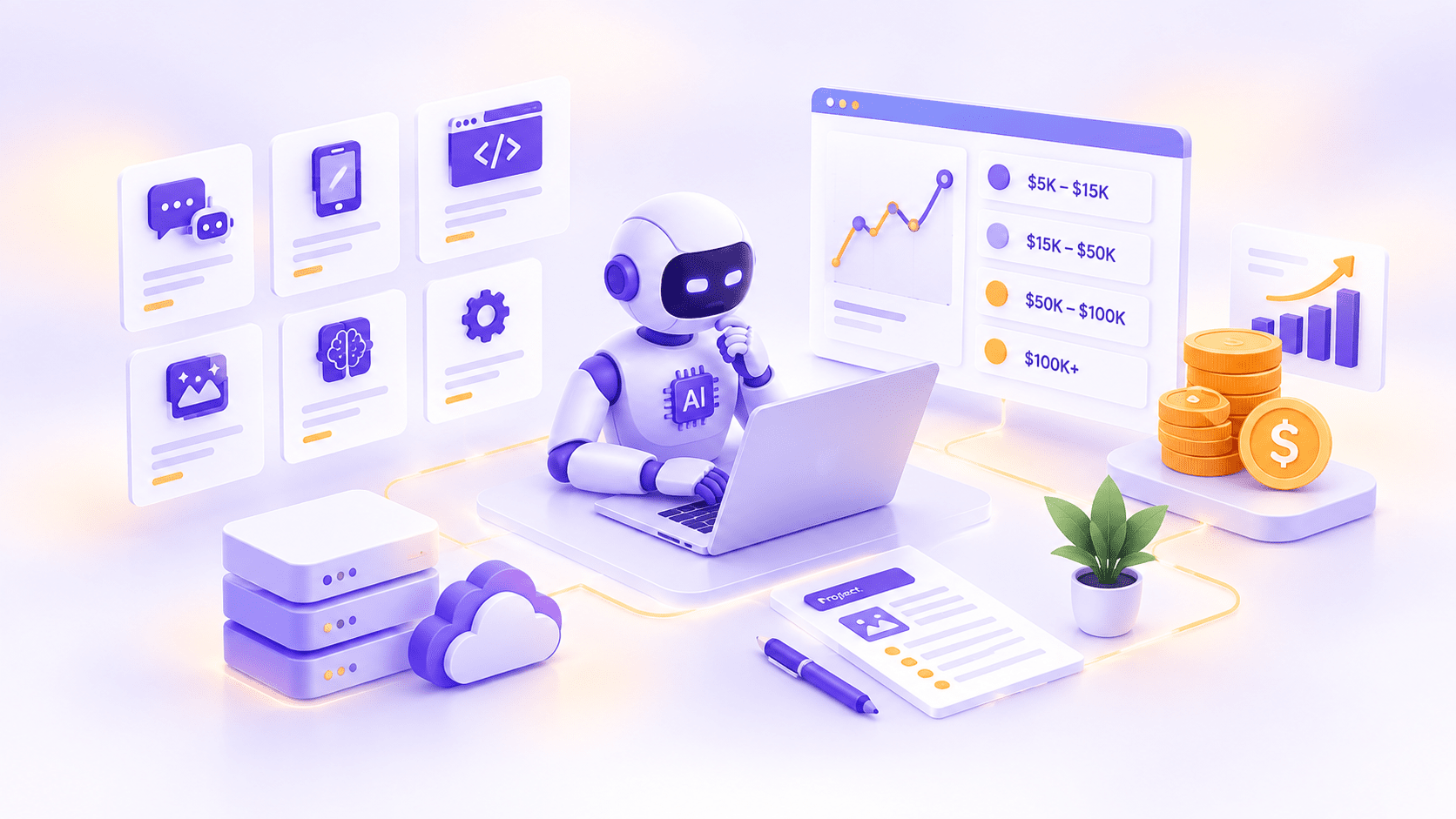
AI development costs in 2026 typically range from around $10,000 for a focused pilot to $500,000 or more for a complex, enterprise-grade system, with most mid-sized business projects landing somewhere between $30,000 and $150,000. The exact figure depends far less on "AI" as a buzzword and far more on the specific approach you take: a simple API integration, a custom-trained model, or something in between.
AI Development Cost at a Glance (2026)
| Project Type | Typical Cost Range |
|---|---|
| Chatbot (API-based) | $5,000 – $40,000 |
| Process automation | $10,000 – $60,000 |
| Computer vision application | $25,000 – $150,000 |
| Recommendation engine | $20,000 – $120,000 |
| Custom LLM integration (RAG or fine-tuning) | $30,000 – $200,000+ |
These ranges reflect typical project scope rather than fixed pricing, and the specific requirements of your use case can push a project toward either end.
What Drives AI Project Costs?
Problem Complexity and Model Choice
Whether you're calling an existing API, building a retrieval system on top of your own data, or fine-tuning a custom model changes the cost structure entirely. Off-the-shelf API integration is the cheapest and fastest path, while custom model training demands considerably more engineering time and compute budget.
Data Readiness
This is the cost driver most businesses underestimate. Cleaning, labeling, and structuring data so a model can actually use it reliably often consumes a large share of total project effort, sometimes rivaling the cost of the model work itself. A project with messy, scattered source data will cost meaningfully more than an identical project with clean, well-organized data.
Integration With Existing Systems
An AI feature that has to plug into legacy databases, CRMs, or internal tools adds real engineering overhead beyond the model itself. The more systems a solution needs to talk to, the more testing, error handling, and maintenance it requires long-term.
Compliance, Safety, and Testing Requirements
Projects touching regulated data, like healthcare or financial information, need additional safeguards, audit trails, and testing rigor that add cost but are non-negotiable for responsible deployment. Skipping this to save budget upfront tends to create far more expensive problems later.
Inference and Running Costs
Beyond the build, ongoing API or compute costs scale with usage, meaning a successful, heavily used feature can cost more to run monthly than a lightly used one, even with identical build costs. This is worth forecasting before launch, not after the first invoice.
Cost by Approach: API Integration vs RAG vs Fine-Tuning vs Custom Models
| Approach | Relative Cost | Best For |
|---|---|---|
| API integration | Lowest | Fast deployment, general-purpose tasks |
| RAG (retrieval-augmented generation) | Moderate | Grounding answers in your own knowledge base |
| Fine-tuning | Moderate to high | Consistent tone, behavior, or domain-specific output |
| Custom model | Highest | Highly specialized problems with no suitable off-the-shelf option |
Most business use cases in 2026 are well served by API integration or RAG. Full custom model training is rarely necessary unless you're solving a genuinely novel problem that existing models handle poorly.
Real Project Ranges From Our Own AI Work
Across our last several AI engagements, straightforward chatbot and automation projects have typically landed in the $8,000 to $35,000 range, while RAG-based systems connecting to internal knowledge bases have run from $25,000 to $90,000 depending on data complexity and integration scope. Larger projects involving deeper system integration or custom workflow logic have exceeded $150,000. These figures reflect actual delivered work rather than generic industry estimates, and they're the numbers we use ourselves when scoping a new project.
The Ongoing Costs of AI (What You Pay After Launch)
Token and Compute Consumption
Usage-based API pricing means costs scale directly with how much the feature gets used, which is good news for low-traffic tools and something to budget carefully for high-traffic ones.
Monitoring and Evaluation
Ongoing evaluation to catch quality regressions, hallucinations, or drift requires dedicated attention, not a one-time setup. Skipping this is one of the most common ways AI features quietly degrade in production.
Model Updates and Drift
As underlying models get updated by their providers, behavior can shift in subtle ways. Budgeting for periodic re-testing and adjustment keeps a feature reliable rather than letting it slowly diverge from what you originally shipped.
Where Businesses Waste AI Budget
The most common waste comes from skipping a proper discovery phase and jumping straight into building, which often means rebuilding significant parts of the system once real requirements surface. A close second is choosing a more complex, expensive approach (custom model training, for instance) when a simpler API integration would have solved the actual problem just as well. Underinvesting in data preparation is another frequent mistake, since a technically excellent model built on messy data will still produce unreliable results.
How to Scope an AI Project That Pays Back
Start with a narrow, well-defined use case rather than an open-ended "add AI to our product" brief, since scope creep is the single biggest cost inflator in AI projects. Get a realistic read on your data's actual state before committing to a build approach, since that alone often determines whether a project is a $15,000 job or a $75,000 one. And build in a clear way to measure whether the feature is actually delivering value once live, so budget decisions six months out are based on real usage data rather than assumptions.
AI development costs vary more than almost any other category of software work, precisely because "AI" covers everything from a simple chatbot to a fully custom model. Getting a real number for your specific use case means having an actual scoping conversation rather than relying on industry averages. Our AI development team can walk through your requirements and give you a grounded estimate based on projects we've actually delivered.
FAQs
Related Blog
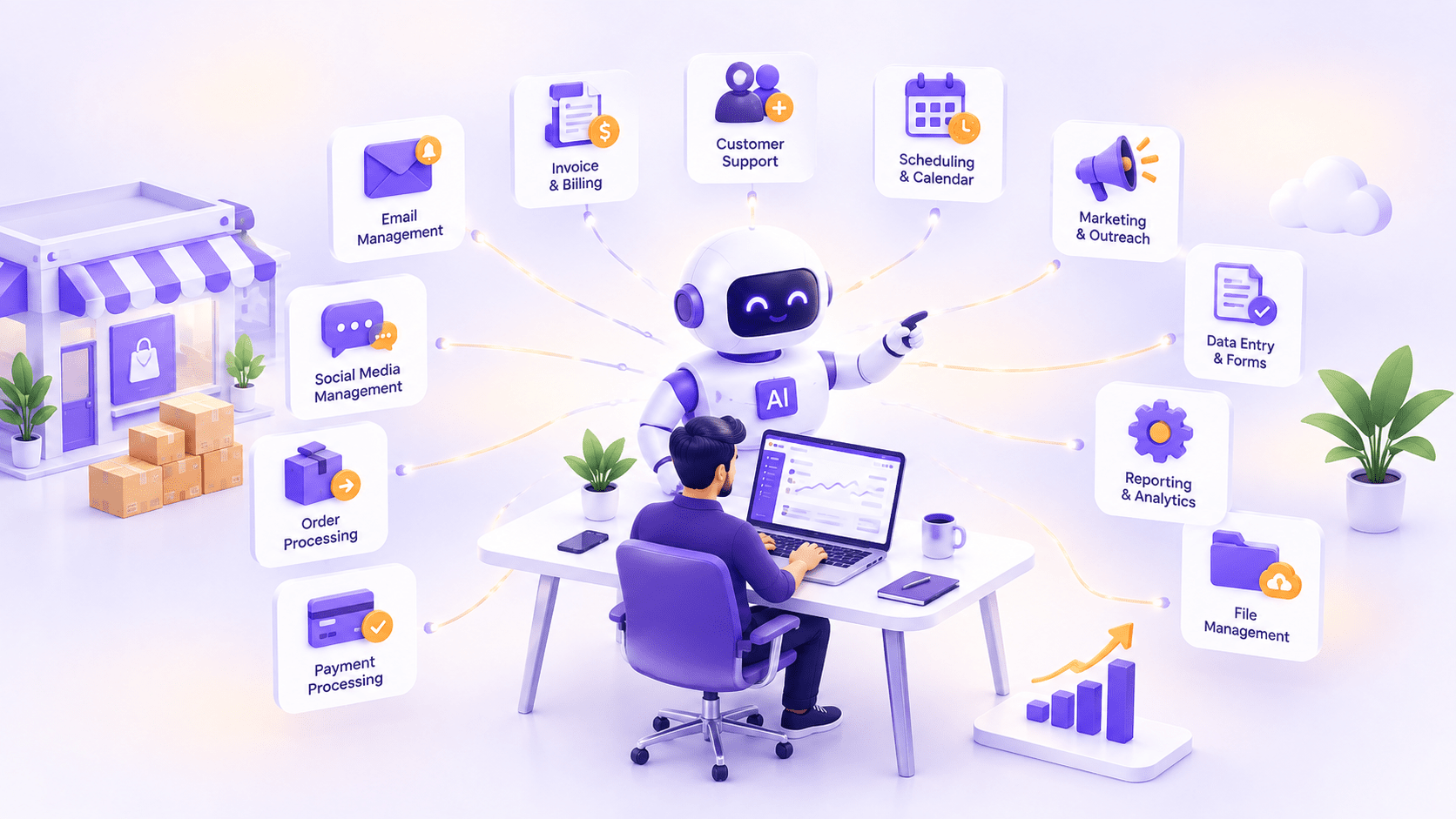
AI Automation for Small Business: 12 Processes Worth Automating First
The highest-ROI processes for small business AI automation are usually customer enquiry triage, invoice processing, appointment scheduling, document drafting, lead qualification, and review response,…

How to Get Your Business Recommended by ChatGPT (and Every Other AI Assistant)
When someone asks ChatGPT for "a good software development agency" or "the best CRM for a small business", the tool does not guess and…
0 Comments
Please log in to post a comment