ERP Implementation Cost: A Realistic Budget Guide for SMEs
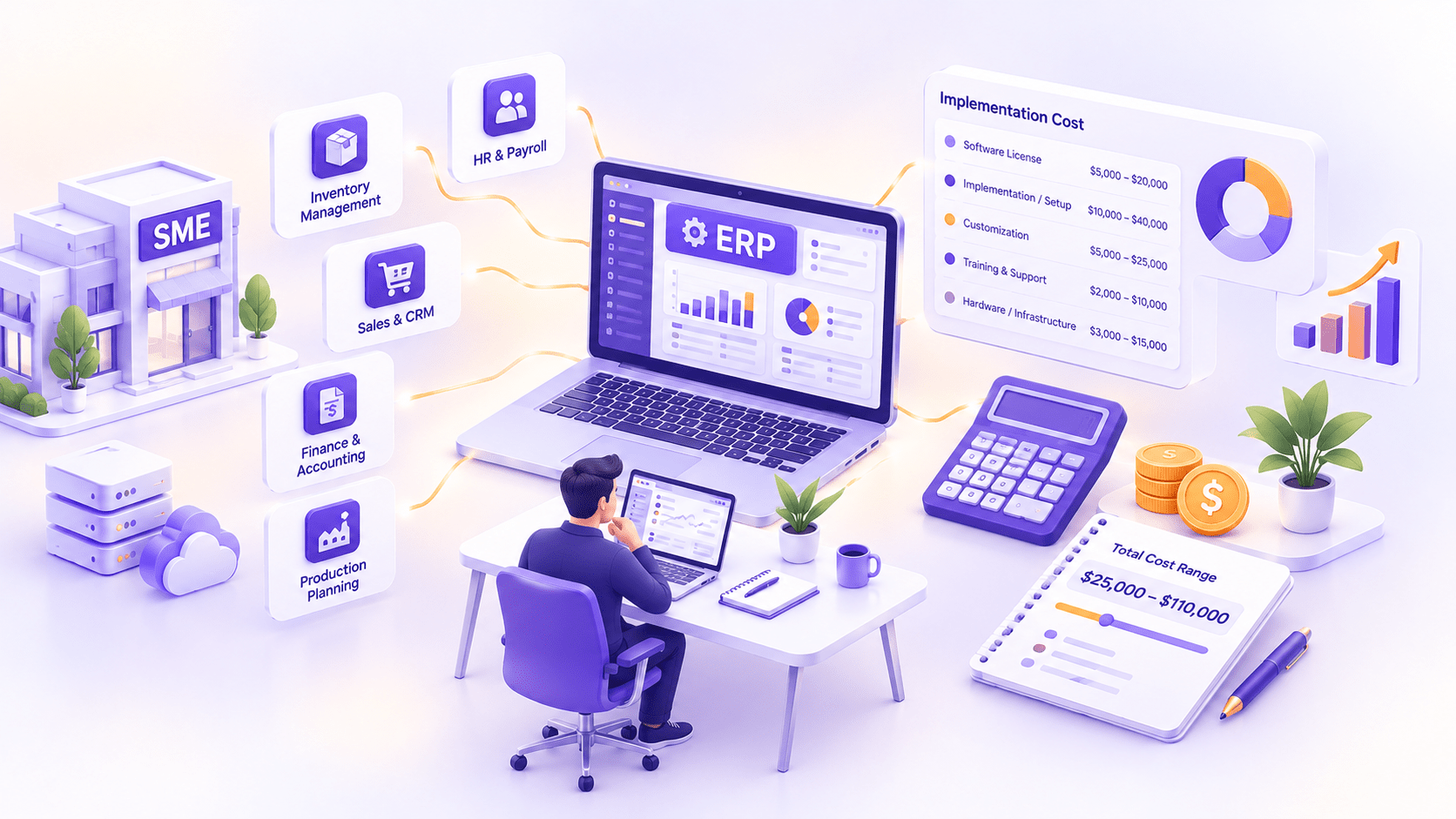
SME ERP implementations typically run from €25,000 to €250,000 all-in, depending on the platform, company size, and how much customization the project requires. The software license is often the smallest line item in the total budget. Implementation partner fees, data migration, training, and post-go-live support usually add up to considerably more than the software itself, which is why so many ERP budgets come in over what the initial quote suggested.
ERP Implementation Cost at a Glance
| Company Size | Odoo | SAP Business One | Custom Build |
|---|---|---|---|
| Small (under 25 users) | €15,000 – €50,000 | €50,000 – €100,000 | €40,000 – €120,000 |
| Mid-sized (25–100 users) | €40,000 – €120,000 | €100,000 – €250,000 | €100,000 – €300,000+ |
| Larger SME (100+ users) | €100,000 – €250,000+ | €200,000 – €500,000+ | €250,000 – €600,000+ |
These bands reflect typical project scope and vary significantly based on customization depth and the number of integrated systems.
The 7 Cost Components of an ERP Implementation
Software Licensing or Subscription
This is usually the most predictable line item, priced per user per month or as a one-time license fee, and it's the number most vendors lead with in early conversations.
Implementation Partner Fees
Partner fees for scoping, configuration, and go-live support typically represent the largest single cost category, often exceeding the software licensing cost itself, particularly for platforms like SAP Business One that require certified partner involvement.
Data Migration and Cleansing
Moving data from legacy systems, and cleaning it up in the process, is frequently underestimated. Messy or inconsistent legacy data can add significant time and cost, especially when historical records need reconciliation before they're trustworthy in the new system.
Customization and Integrations
Adapting the ERP to match specific business processes, and connecting it to other systems like ecommerce platforms or existing CRMs, adds cost proportional to how far your requirements diverge from the platform's defaults.
Training and Change Management
Getting staff comfortable with a new system is often under-budgeted relative to its actual impact on go-live success. Poorly trained users are one of the most common reasons ERP rollouts underdeliver even when the technical implementation goes smoothly.
Infrastructure and Hosting
Cloud-hosted ERP typically folds hosting into the subscription cost, while on-premise deployments carry separate infrastructure costs that need to be budgeted explicitly.
Post-Go-Live Support
The weeks immediately after go-live typically require intensive support to catch issues real usage surfaces that testing didn't, and this period is worth budgeting for separately rather than assuming it's covered by standard support terms.
What Does Each Phase Cost? (Timeline Budget Model)
Most ERP implementations follow a rough pattern: discovery and planning consumes around 10 to 15 percent of the total budget, configuration and customization takes the largest share at 40 to 50 percent, data migration and testing accounts for another 15 to 20 percent, and training plus go-live support rounds out the remainder. Timelines typically run three to six months for a focused Odoo implementation and six to twelve months or more for a larger SAP Business One or custom rollout, with budget spend roughly tracking the timeline phase by phase.
Why ERP Projects Go Over Budget (and How Often)
ERP implementations going over their original budget is common across the industry, and the pattern is fairly consistent: scope expands once stakeholders see the system taking shape and start requesting additional customization, data migration reveals more complexity than initially assessed, or training needs turn out to be greater than planned. Projects with a clearly locked scope and a realistic contingency buffer built in from the start tend to stay far closer to budget than those without one.
Hidden Costs SMEs Miss
Ongoing customization requests after go-live, often framed as "small tweaks," can accumulate into a meaningful recurring cost if not tracked and budgeted for explicitly. Third-party integration maintenance, particularly for older or less common systems, can also require more ongoing attention than anticipated. And the productivity dip during the transition period, while staff adjust to new workflows, is a real cost even though it rarely appears as a line item on any invoice.
How to Budget Realistically: A Worked SME Example
Consider a 50-employee company implementing Odoo across finance, inventory, and CRM. Licensing might run around €15,000 annually, implementation partner fees around €40,000, data migration and cleansing another €10,000, customization and integrations €20,000, and training plus go-live support €8,000, bringing the total first-year cost to roughly €93,000 including a reasonable contingency buffer. Ongoing annual costs after year one, covering licensing, support, and incremental customization, typically settle considerably lower than the first-year total once the heavy implementation work is behind you.
Budgeting realistically for an ERP implementation means planning for the full picture, not just the software license quote you get in the first sales call. If you want a grounded estimate based on your specific requirements rather than a generic industry range, our ERP implementation team can walk through the numbers with you before you commit to a platform.
FAQs
Related Blog

Custom CRM vs Salesforce vs HubSpot: An Honest Cost-Benefit Breakdown
Platforms like Salesforce and HubSpot tend to win in the early years thanks to faster setup and lower upfront cost, while a custom CRM…
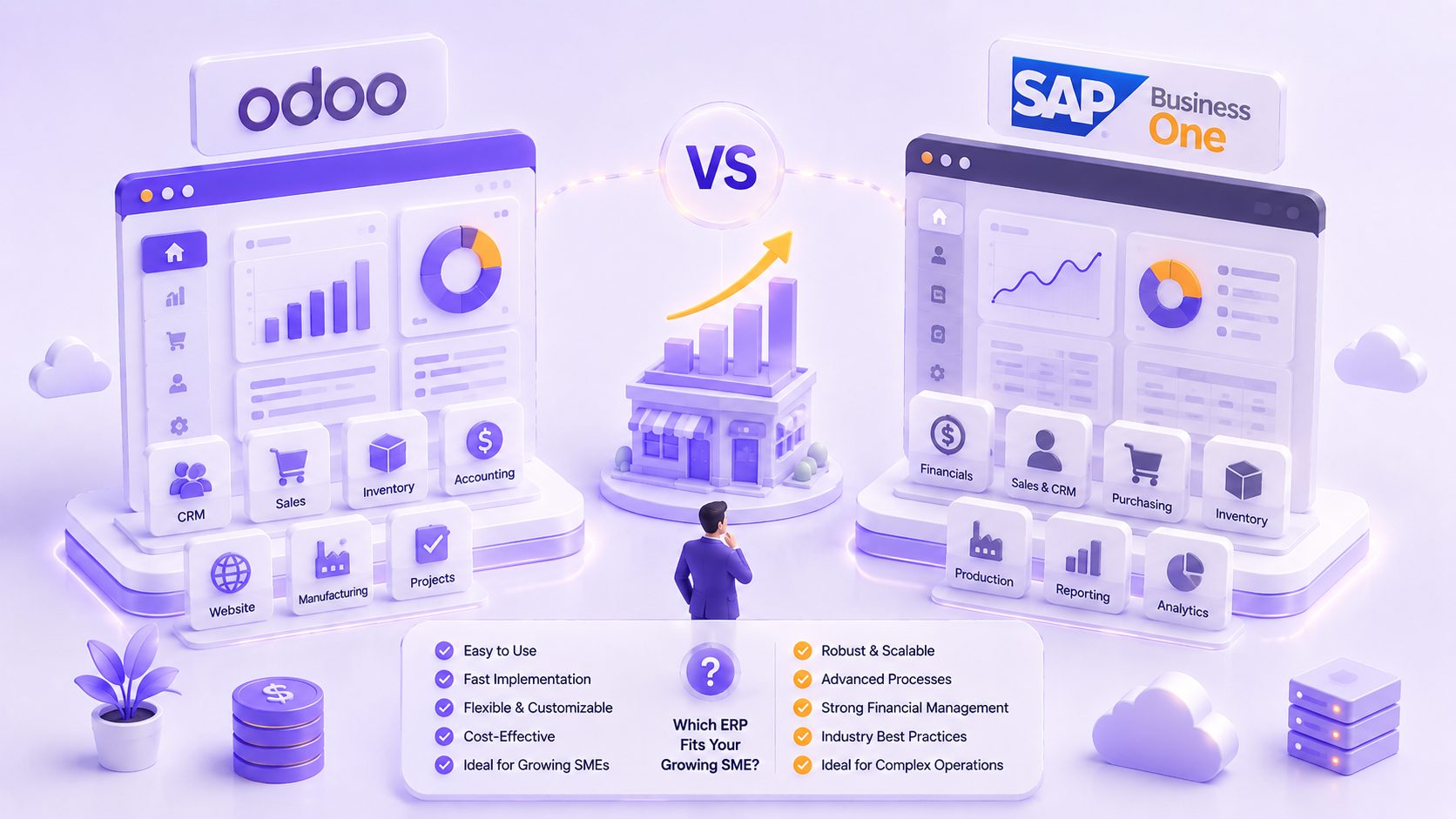
Odoo vs SAP Business One: Which ERP Fits a Growing SME?
Short answer: If you prioritize flexibility, lower licensing costs, and are willing to let an implementation partner take on a heavier share of configuration…
0 Comments
Please log in to post a comment